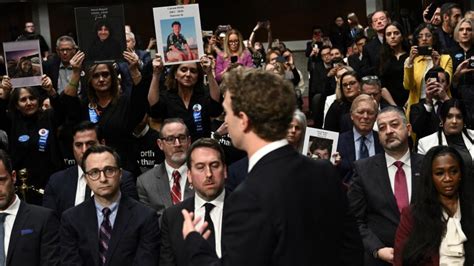
Mark Zuckerberg’s Congressional Apology ExplainedMark Zuckerberg’s Congressional Apology was a monumental moment in tech history, shining a harsh spotlight on data privacy, social media’s immense power, and the complex relationship between tech giants and public trust. For those of us who remember watching it live, or perhaps just catching the endless stream of memes and news clips afterward, it felt like a reckoning. This wasn’t just another CEO facing tough questions; it was the founder of one of the world’s most influential companies, Facebook (now Meta), sitting before a panel of lawmakers, explaining how a catastrophic data breach occurred and what he intended to do about it. The stakes were incredibly high, not just for Facebook but for the entire tech industry, as the world grappled with the implications of user data being exploited without explicit consent. This whole saga kicked off with the infamous
Cambridge Analytica scandal
, where personal data from millions of Facebook users was harvested and used for political advertising, allegedly without their knowledge or consent. It was a wake-up call, guys, demonstrating just how vulnerable our digital lives truly are and how easily our information can be weaponized. The public outcry was massive, leading to widespread calls for greater regulation and accountability from social media platforms. Zuckerberg’s appearance before Congress, specifically the House Energy and Commerce Committee and the Senate Commerce and Judiciary Committees, was a direct consequence of this global uproar. He was there to acknowledge the company’s failings, apologize for the breach of trust, and outline steps Facebook would take to prevent similar incidents in the future. It was a pivotal moment that forced a conversation about the ethical responsibilities of tech companies and the urgent need to protect user privacy in an increasingly data-driven world. The questions he faced were relentless, spanning topics from user data collection and election interference to hate speech and Facebook’s sheer market dominance. We’re talking about a session that lasted over ten hours across two days, an exhaustive grilling that really put the spotlight on the inner workings of Facebook and the decision-making at its highest levels. This event wasn’t just about a single apology; it was about the future of digital privacy, the role of social media in democracy, and the ongoing challenge of balancing innovation with ethical responsibility. The reverberations from this event are still felt today, influencing policy debates, company practices, and how we, as users, perceive and interact with our digital platforms. It was a truly defining moment, shaping not only Facebook’s trajectory but also the broader conversation about tech’s place in society.## The Context: Cambridge Analytica and the Data BreachAt the heart of
Mark Zuckerberg’s Congressional Apology
was the egregious Cambridge Analytica scandal, an event that ripped through the digital landscape and exposed the stark realities of data exploitation. For those unfamiliar, let me break it down for you, because this incident wasn’t just a minor blip; it was a major earthquake that shook the foundations of trust in social media. In 2018, it came to light that Cambridge Analytica, a political consulting firm, had acquired and used the personal data of millions of Facebook users without their consent. The data, initially collected through a seemingly innocuous personality quiz app called ‘thisisyourdigitallife,’ which required Facebook login, was then misused to build psychological profiles of voters. While only a few hundred thousand users actually took the quiz, the app was designed to also scrape data from their Facebook friends, exponentially increasing the reach of the data harvest to an estimated 87 million users globally. This was a colossal breach, not just of data, but of the unspoken social contract between users and the platforms they trusted with their intimate details. The sheer scale and political implications of the data misuse ignited a firestorm of criticism. People were furious, and rightly so, that their personal information – their likes, their networks, their seemingly private interactions – could be leveraged to influence elections and political outcomes. It wasn’t just about targeted ads anymore; it was about psychological manipulation on an unprecedented scale. Facebook, as the platform through which this data was harvested, found itself in the eye of the storm. The public and media demanded answers, accountability, and assurances that such a blatant violation of privacy would never happen again. The #DeleteFacebook movement gained significant traction, reflecting a deep-seated frustration and loss of faith among users. Governments around the world, already wary of tech’s unchecked power, saw this as definitive proof that regulation was not just an option, but a necessity. This scandal wasn’t just a technical oversight; it was a systemic failure in Facebook’s data governance, its oversight of third-party apps, and its response to previous warnings about potential misuse. The company had known about the data harvest for years, back in 2015, but had failed to ensure the data was properly deleted, relying on Cambridge Analytica’s assurances rather than conducting thorough audits. This inaction only exacerbated the public’s outrage and solidified the perception that Facebook had been negligent, or at worst, complicit, in protecting its users’ privacy. The weight of this scandal, and the ensuing public and political pressure, ultimately led to
Mark Zuckerberg’s Congressional Apology
. It forced him, and by extension Facebook, to confront the profound ethical and societal responsibilities that come with wielding such immense power over global communication and personal data. This event undeniably marked a turning point in how tech companies, governments, and individuals would henceforth view and treat digital privacy.## Zuckerberg’s Apology: The Congressional HearingsMark Zuckerberg’s Congressional Apology was delivered during a series of grueling and highly anticipated hearings in April 2018, where he faced a barrage of questions from both the Senate Commerce and Judiciary Committees and the House Energy and Commerce Committee. Guys, if you were watching, it was like a masterclass in political theater, but with real-world consequences that genuinely shaped the trajectory of one of the world’s most powerful companies. Dressed in a dark suit and tie, a departure from his usual hoodie, Zuckerberg sat before a sea of lawmakers, looking at times earnest, at times slightly overwhelmed, but always composed. The atmosphere in the hearing rooms was thick with tension, a mix of curiosity, skepticism, and outright indignation from senators and representatives. Many of them, it was clear, were not deeply familiar with the intricacies of how Facebook operated, often asking fundamental questions about data collection, algorithms, and the company’s business model. This presented Zuckerberg with both a challenge and an opportunity: to educate lawmakers while simultaneously defending Facebook’s practices and apologizing for its failings. His opening statement was meticulously crafted, immediately addressing the elephant in the room:
“It was my mistake, and I’m sorry.”
This phrase, or variations of it, became a recurring theme throughout his testimony, acknowledging Facebook’s responsibility for the data breach and the subsequent erosion of user trust. He emphasized that Facebook was an “idealistic and optimistic” company when it started, focused on connecting people, but admitted they hadn’t taken a “broad enough view” of their responsibilities. He outlined a series of steps Facebook was taking to prevent future abuses, including investigating every app that had access to large amounts of data, building new tools to restrict data access, and making it easier for users to understand and control their information. However, the apology, while frequent, was often qualified with explanations about Facebook’s complex systems and the broader challenges of operating a global platform. The questions from lawmakers were wide-ranging and often pointed. They drilled down on specifics: how exactly did Cambridge Analytica get the data? Why did it take so long for Facebook to act? What was Facebook doing about foreign interference in elections, hate speech, and the proliferation of misinformation? Some senators pressed on privacy settings, asking simple yet profound questions like, “Does Facebook share user data with advertisers?” to which Zuckerberg would often give nuanced answers about targeted advertising without explicitly selling data. Other lawmakers expressed deep concerns about Facebook’s immense power, its near-monopoly status, and the potential for it to stifle competition or manipulate public discourse. One particularly memorable exchange involved a senator asking if Facebook would consider offering a paid, ad-free version, a question that hinted at the core of Facebook’s business model. Zuckerberg’s responses were generally measured and consistent. He reiterated commitments to privacy, security, and investing in AI to proactively identify harmful content. He stressed the importance of Facebook’s mission to connect the world, while also acknowledging the significant challenges that came with it. He often emphasized that Facebook was learning from its mistakes and evolving, promising substantial investments in people and technology to safeguard the platform. Despite the sincerity of his apologies, there was a palpable sense among some lawmakers that Facebook hadn’t fully grasped the gravity of its past errors or truly committed to fundamental changes beyond PR-friendly initiatives. The hearings, spanning two full days, were an exhaustive and often intense interrogation of Facebook’s very ethos, laying bare the profound disconnect between Silicon Valley’s ambition and Washington’s growing concern for public welfare and digital rights. It was a crucible moment, forcing Zuckerberg to publicly confront the unintended consequences of his creation and setting the stage for increased scrutiny and regulation of the entire tech industry.## The Aftermath and Facebook’s ReformsFollowing
Mark Zuckerberg’s Congressional Apology
, the pressure on Facebook to enact meaningful reforms was immense, and the company, now under unprecedented scrutiny, began to roll out a series of significant changes aimed at rebuilding trust and addressing the systemic issues that led to the Cambridge Analytica scandal. This wasn’t just about lip service; it was about demonstrating a tangible commitment to privacy and data security, or risking further public backlash and regulatory intervention. Immediately after the hearings, Facebook initiated a comprehensive
“app audit”
, a massive undertaking to review thousands of third-party applications that had access to large amounts of user data, similar to the app that Cambridge Analytica exploited. This meant cutting off access for apps that weren’t being used, or whose developers couldn’t adequately demonstrate their data handling practices. It was a clear signal that the Wild West days of app developers freely collecting data were over. The company also introduced much stricter API access rules, making it significantly harder for new apps to gain broad access to user information, especially data about friends of app users. Beyond app access, Facebook made significant overhauls to its privacy settings, aiming to make them more transparent and user-friendly. They launched a new “Privacy Center” and consolidated various privacy controls into a single, easier-to-navigate dashboard. Users were given more granular control over their data, including who could see their posts, what information was shared with apps, and how their data was used for advertising. This was a direct response to criticisms that Facebook’s privacy settings were notoriously complex and often designed to encourage more data sharing rather than less. Another crucial area of reform focused on
election integrity and combating misinformation
, which had been significant points of contention during the hearings. Facebook dramatically increased its investment in content moderation, hiring thousands of new reviewers and deploying advanced AI to detect and remove false news, hate speech, and foreign interference. They started labeling state-controlled media, implementing stricter rules for political advertising requiring verification of advertisers’ identities and locations, and creating a public archive of political ads for greater transparency. These measures were designed to prevent a repeat of the 2016 election interference that also came under heavy fire. Furthermore, Facebook committed to greater transparency in its operations. They began publishing regular
transparency reports
detailing content moderation efforts, government requests for data, and security incidents. They also announced the creation of an independent Oversight Board, often referred to as Facebook’s “Supreme Court,” tasked with making binding decisions on challenging content moderation cases, providing an external layer of accountability. While these reforms were extensive, they were met with a mixed reception. Critics argued that many changes were reactive rather than proactive, and that Facebook’s underlying business model, which relies on extensive data collection for targeted advertising, remained fundamentally unchanged. Concerns also persisted about the effectiveness of content moderation at scale, the power of Facebook’s algorithms, and its market dominance. Nevertheless, these actions represented a significant shift in Facebook’s approach to privacy and platform governance. The congressional apology and the subsequent reforms initiated a new era of heightened scrutiny and regulatory pressure, not just for Facebook, but for the entire tech industry, setting a new benchmark for corporate responsibility in the digital age. The impact of these changes continues to be felt, shaping how users interact with the platform and how tech companies are expected to manage the vast amounts of personal data they collect.## Long-Term Impact on Facebook and Tech IndustryThe long-term impact of
Mark Zuckerberg’s Congressional Apology
and the Cambridge Analytica scandal was nothing short of transformative for Facebook and, by extension, the entire tech industry. This wasn’t just a fleeting news cycle; it fundamentally altered how the public, lawmakers, and even rival tech companies viewed data privacy, platform responsibility, and the ethical obligations of Silicon Valley giants. For Facebook itself, the most immediate and profound impact was a significant dent in its
reputation and brand image
. Prior to 2018, Facebook, despite its controversies, largely enjoyed a perception of being an innovative, connective force. Post-Cambridge Analytica, that image was irrevocably tarnished, replaced by a narrative of a company that was careless with user data, slow to act on abuses, and perhaps even too powerful for its own good. This shift in public perception led to a lasting erosion of trust among many users, some of whom permanently left the platform, while others became far more wary about the information they shared. The scandal also accelerated a broader cultural shift within the company, forcing it to prioritize “privacy” and “safety” in its product development and corporate messaging in ways it hadn’t before. Internally, there was a scramble to implement the reforms Zuckerberg promised, leading to significant investments in new privacy tools, content moderation teams, and AI-driven solutions to identify harmful content. This cultural recalibration culminated in a massive corporate rebrand in 2021, when Facebook changed its parent company name to Meta Platforms, Inc. While ostensibly about its metaverse ambitions, the rebrand was also widely seen as an attempt to distance itself from the controversies associated with the Facebook name, signaling a new chapter focused on future technologies rather than past privacy breaches. The financial consequences, while not immediately crippling, were substantial. Facebook faced billions of dollars in fines, most notably a record-breaking $5 billion penalty from the Federal Trade Commission (FTC) in 2019 for privacy violations related to the Cambridge Analytica case. This fine, the largest ever imposed on a tech company, underscored the growing resolve of regulators to hold tech giants accountable. The increased regulatory scrutiny also led to higher operating costs, as Facebook had to invest heavily in compliance, legal defenses, and the resources needed to implement its promised reforms. Beyond Facebook, the
entire tech industry
felt the ripple effects. The hearings served as a massive wake-up call, demonstrating that the era of unchecked self-regulation was rapidly drawing to a close. Lawmakers in the U.S., inspired by similar legislative efforts abroad like Europe’s General Data Protection Regulation (GDPR), began to seriously consider new federal privacy laws. States like California quickly enacted their own comprehensive privacy legislation, such as the California Consumer Privacy Act (CCPA), setting a precedent for other states to follow. This new regulatory environment forced other tech companies, from Google to Amazon to Apple, to re-evaluate their own data handling practices, invest more in privacy-enhancing technologies, and be more transparent with users about data collection. The conversation around data privacy shifted from a niche concern to a mainstream imperative, with companies now often competing on their privacy credentials. Furthermore, the scandal ignited broader discussions about the power of algorithms, the spread of misinformation, and the role of social media in democracy. It fueled antitrust concerns, with both Democrats and Republicans questioning the market dominance of tech giants and exploring potential breakups or tighter regulations. In essence,
Mark Zuckerberg’s Congressional Apology
was a catalyst that propelled the tech industry into a new era of accountability. It forced a critical examination of business models built on vast data collection, sparked a global movement for stronger privacy protections, and irrevocably changed the relationship between technology companies and the societies they serve. The repercussions continue to unfold, shaping legislation, corporate strategies, and the very design of the digital products we interact with daily.## Lessons Learned and The Road AheadThe fallout from
Mark Zuckerberg’s Congressional Apology
and the Cambridge Analytica scandal provided invaluable lessons, not just for Facebook but for the entire digital ecosystem, from burgeoning startups to established tech behemoths and, crucially, for us, the users. One of the most significant takeaways is the undeniable truth that
data privacy is no longer an optional feature; it’s a fundamental expectation and a critical ethical responsibility
. Companies can no longer afford to treat user data as a limitless resource to be exploited; they must view themselves as custodians of sensitive information. The idea of “move fast and break things,” once a celebrated mantra in Silicon Valley, has given way to a more cautious approach, emphasizing “move fast with responsibility” or even “build with privacy by design.” This means integrating privacy considerations into every stage of product development, rather than retrofitting them after a crisis. For tech companies, the event underscored the urgent need for
robust internal governance and proactive risk assessment
. Relying on third-party assurances, as Facebook did with Cambridge Analytica, is no longer acceptable. Companies must implement rigorous auditing processes for any third-party app or service that accesses user data, and they need clear, enforceable policies regarding data retention, deletion, and usage. The cost of neglecting these responsibilities, as Facebook learned with billions in fines and irreparable reputational damage, far outweighs the perceived benefits of unchecked growth. The incident also highlighted the critical importance of
transparency and clear communication
with users. When a data breach or misuse occurs, users expect honest, straightforward explanations and clear actions to rectify the situation. Obfuscation or delayed disclosure only erodes trust further. Companies need to be prepared to admit mistakes, apologize sincerely, and outline concrete steps for improvement, rather than issuing vague statements or placing blame elsewhere. From a regulatory perspective,
Mark Zuckerberg’s Congressional Apology
galvanized governments worldwide into action. It became abundantly clear that self-regulation alone was insufficient to protect citizens in the digital age. This led to a wave of new privacy legislation, like GDPR in Europe and CCPA in California, and spurred ongoing debates about federal privacy laws in the U.S. and similar frameworks globally. The trend is moving towards more stringent data protection laws, greater corporate accountability, and potentially, increased antitrust scrutiny of tech monopolies. Lawmakers realized they needed to better understand the technology they were regulating, leading to more tech-savvy policy discussions. For us, the users, the most potent lesson is the need for
digital literacy and informed consent
. We’ve become much more aware that “free” services often come at the cost of our data. It forces us to ask critical questions: What data am I sharing? Who has access to it? How is it being used? The scandal encouraged a more proactive approach to managing our online privacy, from scrutinizing app permissions to regularly reviewing privacy settings on social media platforms. It’s about being mindful consumers of digital services, understanding the implicit trade-offs, and advocating for stronger privacy protections. Looking ahead, the road ahead for social media and the tech industry is paved with continued challenges. The tension between innovation and regulation will persist, as will the ethical dilemmas surrounding AI, algorithmic bias, and the future of data ownership. Companies will face ongoing pressure to balance growth with responsibility, while governments will strive to create regulatory frameworks that foster innovation without compromising fundamental rights. The conversation sparked by
Mark Zuckerberg’s Congressional Apology
is far from over; it’s an ongoing dialogue that will continue to shape our digital future, demanding vigilance, adaptability, and a collective commitment to a more secure and trustworthy online world. The lessons from this pivotal moment serve as a constant reminder that with great technological power comes immense societal responsibility.
